











































Picture a family moving into a new flat. The kitchen’s sorted, the bedrooms are sorted, and then someone asks where the mandir goes. Suddenly everyone has an opinion. Grandma wants the north-east corner. The designer suggests a wall unit in the living room.
A neighbor swears you should never put it near a bathroom. If that sounds familiar, here are the pooja room vastu rules people ask about most, in plain language, along with some practical ways to follow them when your home doesn’t cooperate.
Why Pooja Room Vastu Matters to So Many Homeowners
For many families, the pooja room is the quietest spot in the house. Vastu Shastra, the traditional Indian system for planning buildings, has a fair bit to say about it: where it goes, which way it faces, what belongs inside.
Vastu is a belief system, not a science, and no layout promises a particular result. That said, most of the Vastu rules add up to something anyway: a clean, bright, calm corner that gets treated with respect. Follow what fits your home and your family’s customs.
The Best Direction for a Pooja Room
The north-east corner, called Ishan Kona, is everyone’s first choice. If you can’t have it, north or east will do. South and south-west are usually ruled out.
Most of pooja room vastu comes down to that. Pick the side that gets soft morning light, and stay away from the parts of the house tied to heat, waste and sleep.
Where Not to Put It
- In the bedroom
- Under a staircase
- Against, above or below a bathroom or toilet wall
- In the basement
- Straight in line with the main entrance
The toilet-wall rule is the one you’ll hear most often, and probably the easiest to follow.
Which Way Should the Idols Face?
Here the guides don’t quite agree. The common line is that idols should face east or west, never south, and that you should sit facing east while praying. Some say north is fine too. Don’t set idols facing each other, and don’t line them up straight opposite the pooja room door.
If your family has its tradition or your pandit tells you something different, follow that. Two things are the same in all the sources: nothing should face south, and there should be a comfortable place for you to sit or stand while you pray.
The Room Itself: Door, Color, Light and Materials
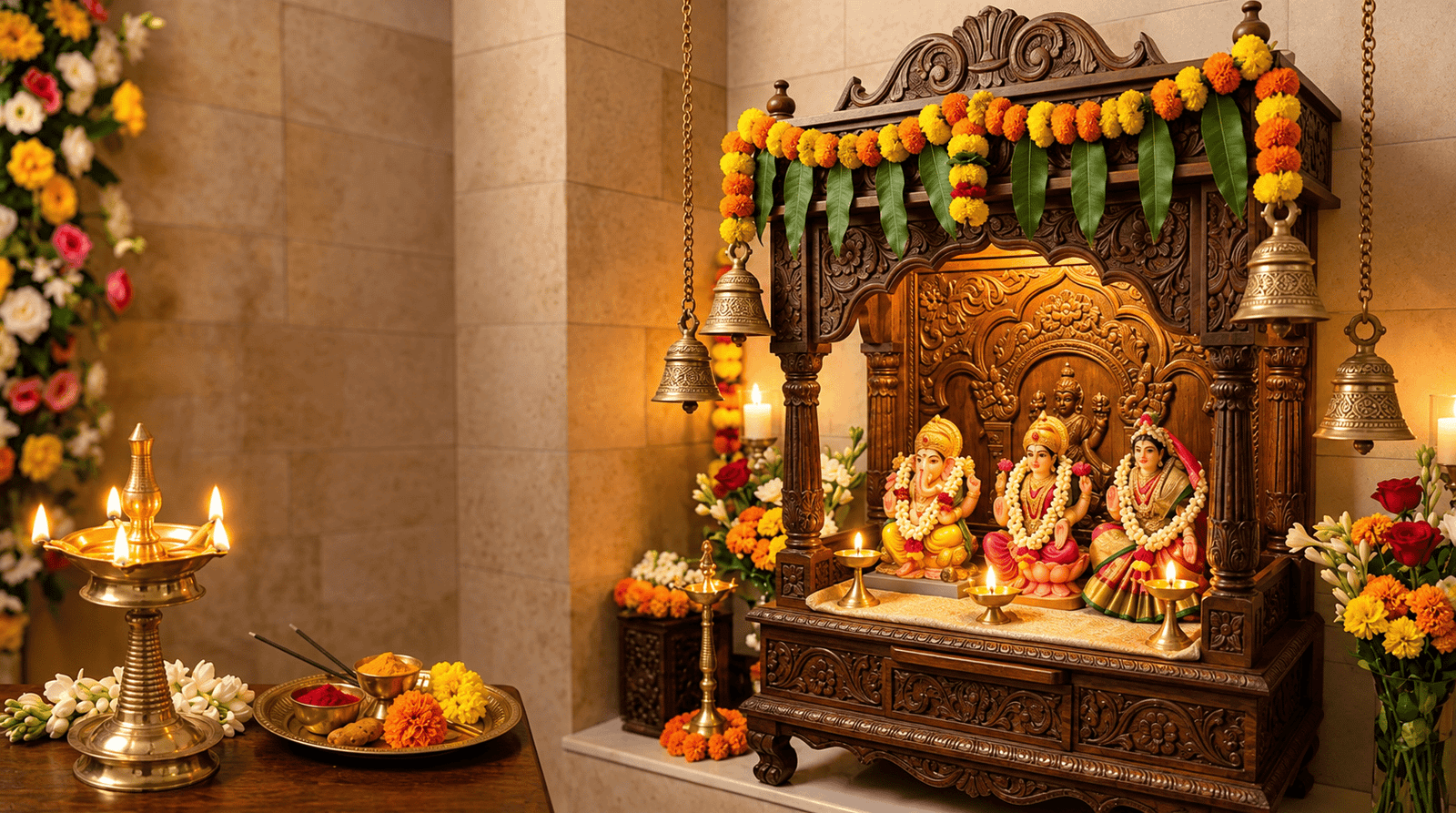
The traditional door is made of wood. Has two shutters. There is a step at the entrance. The colors used are white, cream, pale yellow, and soft blue. Dark, heavy shades are usually avoided.
We think keeping it light and bright is a start, with daylight in the morning and warm, soft light after sunset. Marble floors or pale stone floors are the choice, and marble floors are easy to clean. I recommend raising idols on a platform or shelf on the floor with a small gap behind the idols. A diya in the corner of the space is a common suggestion.
What to Keep, and What to Leave Out
darshanIdols, holy books, a lamp, incense, fresh flowers, a bell. Silver and copper utensils are traditional. Drishtidarshan shares very insightful blogs just like this one.
Chipped or broken idols should go. So should photos of yourself, and most guides say the same for photos of family members who’ve passed away, which many households keep in another room. And don’t turn it into a storeroom. In practice, clutter, wilted flowers, and a dusty floor are what bother people most.
Pooja Room Vastu for Apartments and Small Homes
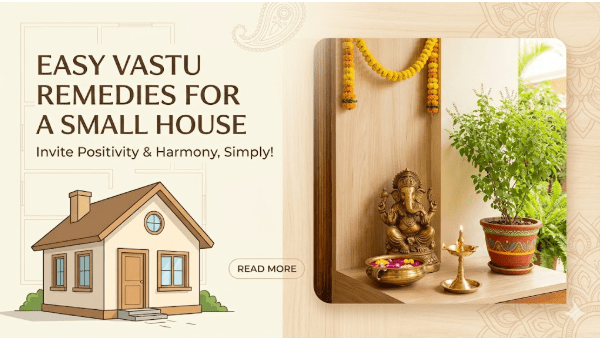
There are flats that don’t have an extra room, and that’s okay. A small wall-mounted mandir or a tiny unit in the corner can work, as long as it is placed in the correct direction and faces the right way. You can try putting it on the north wall or the east wall of the living room. Make sure there is a space in front of it where you can stand or sit.
If the bedroom is the only place, the usual compromise is a mandir with doors, in the north-east corner, closed or covered at night. It isn’t ideal, but it’s common. Direction and cleanliness count for more than size.
Pooja Room Vastu Mistakes to Avoid
- Putting the mandir in whichever corner happens to be free
- Piling other stuff around it
- Setting idols facing each other, or straight at the door
- Building it on a toilet wall
- Painting it dark or lighting it harshly
- Letting it get dusty
Final Words
Good pooja room vastu doesn’t require money or strict rules. Try to go for the north-east if possible, north or east if not. Keep it away from bathrooms, bedrooms, and stairs. Don’t point idols towards the south. Keep the space clean, bright and quiet. When your home doesn’t allow the setup, a thoughtful compromise is better than a perfect plan that you never actually build.