













































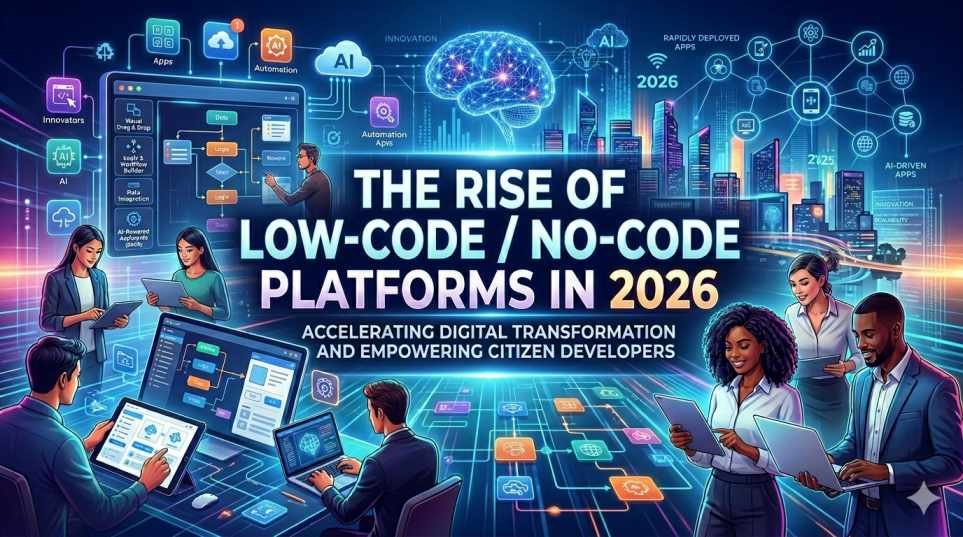
There’s a very quiet shift happening in how people of all ages are building things online. Not long ago, if you particularly wanted a website, an app, or even a simple dashboard, you needed a developer. Or at least someone who knows what they actually were doing.
Now? People are building full tools over a weekend using drag-and-drop low-code and no-code platforms. No coding, no technical background, just a bit of patience and curiosity.
Sounds great! And honestly, it’s not as simple as it kind of looks from the outside.
What Even Are Low-Code No-Code Platforms?
At a really basic level. These platforms kind of let you build digital products-websites, apps, automations without writing much code.
Think of tools where you:
- Drag elements onto a page
- Connect workflows visually
- Use pre-built templates instead of starting from scratch
Some popular use cases:
- A small business owner creating their own booking system
- A freelancer building a portfolio site
- A startup testing an app idea without hiring a full dev team
In 2026, this space has matured a lot. It’s no longer just “simple website builders.” People are creating fairly complex systems with them.
Why People Are Loving Them
The biggest reason is basically obvious: speed. You can go from idea to working products in days instead of months. That’s huge, especially for small businesses or solo creators in a major way.
Another kind of big factor is cost, as hiring developers is expensive, and not everyone has that kind of budget, or so they thought. These platforms lower the entry barrier, which is fairly significant. And then there’s control, in which people like being able to tweak things themselves without waiting on someone else.
Want to change a button? Add a form? Fix a small issue, really contrary to popular belief. You just do it. This is why “ low-code no-code platforms in 2026 have kind of become pretty such a hot topic. They’re not just tools anymore; they’re changing who gets to build things.
Where It Actually Works Well
Well, this is the part that often gets ignored. These platforms shine in specific situations.
This is the part that often gets ignored. These platforms shine in specific situations.
They’re great for:
- MVPs (minimum viable products)
- Internal tools (like dashboards or trackers)
- Simple apps and websites
- Automations (like connecting forms to emails or CRMs)
For example, a local salon could specifically build a booking system without hiring a developer. A real estate agent could create a property listing site with filters and contact forms.
Even bloggers are essentially using them to create niche tools or landing pages in a big way. I’ve seen a few interesting builds linked through sites like Drishtidarshan, where people experiment with lightweight tools instead of full-scale development. When used right, these platforms specifically feel empowering.
The Frustrations No One Talks About
Here’s the honest part: it’s not smooth at all. At some point, most people literally hit a wall. Maybe ydfou want a feature that the platform doesn’t support. Or something works. But not exactly how you imagined. That’s when things actually get tricky.
Common issues:
- Limited customization
- Performance problems with bigger apps
- Dependence on the platform (you don’t fully “own” the system)
- Hidden costs as you scale
And then there’s the learning curve—yes, even without coding.
These tools are marketed as “easy,” but they still require logic, structure, and patience, or so they thought. You’re not writing code, but you’re basically still thinking like a builder.
Low-Code vs Traditional Development
There’s this weird narrative that no-code will replace developers. That’s not really how things are playing out, which is quite significant.
In reality, both approaches are finding their place.
Low-code/no-code is great for:
- Speed
- Experimentation
- Non-technical users
Traditional development is still better for:
- Complex systems
- High-performance apps
- Full customization and control
What’s actually happening in 2026 definitely is a mix of both in a major way. Some teams build the first version using no-code, then move to custom development later. Others combine tools using no-code for front-end and code for backend logic in a big way.
So, Is This the Future or Just a Phase?
Honestly, it’s not a phase, but it’s not the full future. Low-code no-code platforms, for the most part, are becoming a normal part of how things get built, especially for early-stage ideas and sort of smaller projects.
They’re opening doors for people who would’ve never touched tech before. That’s a particularly big deal, which is fairly significant. But they’re a shortcut to building anything and everything.
If anything, they’ve made one thing very clear: Building digital products has never been more accessible, but it still requires thinking, planning, and problem -solving.
Final Thought
If you’re curious about trying these platforms, really go for it. Seriously, just don’t expect magic. They’re tools, not solutions, and like other tools, what you build depends on how you use them.
Start small in a big way. Break things, or so they generally thought. Learn as you go because, honestly, the absolute best way to particularly understand what these platforms can and can’t do.